
Sculptured Brickwork: What’s it All About?
Can You Paint Brick? Understanding the Basics
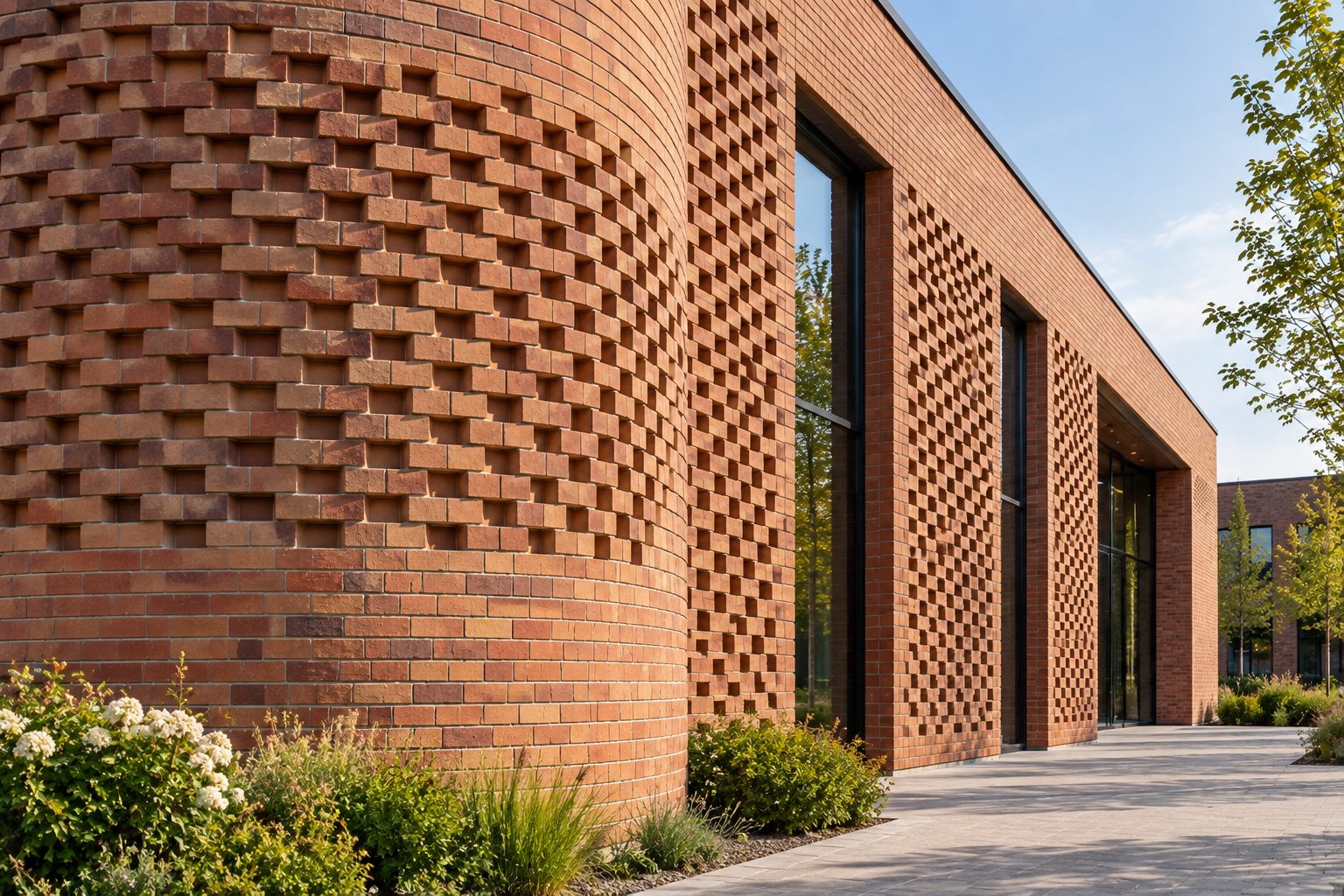
In the hands of the right designer, brick can help to create simply stunning architecture. Sculptured brickwork is the practice of manipulating the shape, texture, and arrangement of bricks to create three-dimensional patterns, reliefs, and decorative features on a building's surface. It is used in some of the most admired architecture around the world.
At Modular Clay Products, we're always keen to highlight what it can achieve.
So What is Sculptured Brickwork?
Bricks are normally placed in a flat, uniform bond. Sculptured brickwork uses projecting, recessed, angled, or specially moulded units to cast shadows and create visual movement across a wall. The result is a façade that changes appearance depending on the time of day and the angle of the sun, giving buildings a dynamic, almost living quality.
Decorative brick detailing has long featured in architecture, from mediaeval polychrome patterning to the elaborate brick expressionism of 1920s Germany and the Netherlands. The great thing is that modern manufacturing allows architects to specify bespoke shapes and profiles with a level of consistency that hand-craftsmanship alone can't match.
Examples of Sculptured Brickwork
The Dr Chau Chak Wing Building, Sydney.
Designed by Frank Gehry for the University of Technology Sydney, this building's eastern façade uses roughly 320,000 custom-made bricks laid by hand to create a rippling, undulating surface that critics have compared to a crumpled paper bag(opens in new tab). Five custom brick forms were developed to achieve its fluid effect.
The Scoop, London.
This office extension by Corstorphine & Wright takes its name from the large, gouged form sculpted into its white brick façade(opens in new tab), designed to frame the circular window of a neighbouring Grade II-listed church. The corners round smoothly while a pixellated effect is created through stepped brickwork within the scoop itself.
Haikou Gaoxingli Insun Cinema, China.
Chinese studio One Plus Partnership overhauled this cinema lobby using curved red-brick protrusions(opens in new tab) that rise from the floor to form sculptural seating and a reception counter, and extend from the ceiling.
The rippling forms were designed in reference to the sea along the coastal city of Haikou.
Getting the Detail Right
As the examples above show, sculptured brickwork needs a higher level of technical precision than standard brick-laying. Getting the geometry, tolerances, and bonding patterns right requires close collaboration between architect, contractor, and manufacturer from the earliest design stages.
The key considerations include:
- Structural implications of projecting or cantilevered units
- Weathering and water run-off across textured surfaces
- The consistency of colour and finish across custom-moulded bricks
- The buildability and installation sequencing on site
Ready to Bring Your Design Vision to Life?
Modular Clay Products can advise on the best types of bricks that commercial architects can use for upcoming projects or renovations. Our wide range of sturdy and long-lasting bricks makes Modular Clay Products the best option for UK bricks, helping to keep your buildings and structures intact and in good condition for years to come. Contact us to find out what our expertise can bring to your architectural project.