
Four Famous UK Brick Buildings and the Stories Behind Their Bricks
Clay brick is arguably the most culturally and structurally important building material in the UK. Indeed, some of our most beloved buildings owe their unique character to the unassuming clay brick. Here we put four famous UK brick buildings under the spotlight to explore what they can teach anyone choosing bricks today.
Hampton Court: The Palace That Made Brick Royal
Cardinal Wolsey began building Hampton Court from brick in 1515. Then in 1529, as Wolsey’s influence waned, Henry VIII took it over. Royal ownership did a great deal to establish brick as a material fit for the wealthy and powerful.
Tudor bricks were often made by travelling brickmakers, who dug clay on or near the site and fired it in temporary open “clamps”. The results were uneven: bricks were thinner and less regular than today’s, and colour varied from brick to brick. Builders turned that variety into decoration. They used darker, over-fired headers to form diamond-shaped “diaper” patterns, laid the bricks in thick lime mortar, and topped the palace with ornate chimney stacks.
That warm, textured look is exactly what handmade bricks set out to recreate today. If you want a building with the depth and individuality of Tudor brickwork, handmade or handmade-style facing bricks are the best place to start.
St Pancras: The Red Brick That Was Nearly Lost
Few buildings show off Victorian red brick as boldly as St Pancras does. William Henry Barlow’s train shed opened in 1868, followed in 1873 by George Gilbert Scott’s Midland Grand Hotel. Scott set a red brick against cream Ancaster limestone and polished red and grey Peterhead granite, creating the multi-coloured effect typical of High Victorian Gothic.
In the 1960s, St Pancras faced demolition, but a public campaign saved it. Now Grade I listed, it reopened in 2007 as St Pancras International after an £800 million restoration. It shows how carefully chosen red facing bricks can give a building a presence that lasts well over a century.
Royal Albert Hall: Six Million Bricks and a Terracotta Crown
Queen Victoria opened the Royal Albert Hall on 29 March 1871. It was the centrepiece of Prince Albert’s plan for a cultural quarter in South Kensington, inspired by the Great Exhibition of 1851.
Its exterior uses more than six million red bricks and around 80,000 blocks of terracotta. An 800-foot mosaic frieze wraps around the building, showing that fired clay could be decorative as well as structural. Historians still disagree about who made the terracotta: some sources credit Gibbs and Canning of Tamworth, others Alexander Wilson & Son of Dunfermline.
The hall shows just how much clay can do. Today, glazed bricks and special shapes carry on that tradition, adding colour, sheen and detail to modern façades.
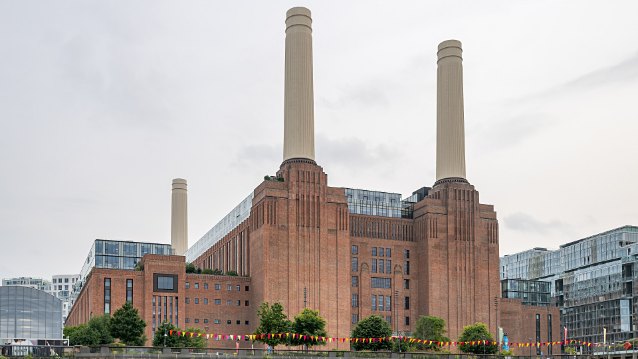
Battersea Power Station: The Art of Brick Matching
Battersea Power Station is one of London’s most recognisable landmarks, built from some six million bricks between 1929 and 1955. Its main brick was a Golden Brown Pressed brick, and the wash towers used tough red Accrington bricks.
When the station was restored, the challenge was to make the new bricks blend seamlessly with the old. About 1.75 million new imperial-sized bricks were used, 1.3 million of them made by hand.
Battersea is the clearest example of why brick matching matters so much. Whether you are restoring a listed building or adding an extension to a Victorian terrace, the right colour, texture and size make the difference between a repair that disappears and one that sticks out.
Find Your Brick with Our Brick Selector
Whatever type of brick you’re looking for, Modular Clay Products can help you find the right one for your commercial project or extension. Rather than scrolling through thousands of product pages, use our Brick Selector to narrow your search by brick colour, texture and speciality.
You can also compare your shortlist side by side, with all the specifications in one window. Once you’ve settled on a brick, our team can help you find the most suitable, cost-effective and attractive solution for your building. Contact us to find out more.